When we arrived at Tuutin, a small Shuar community in Ecuador's Morona Santiago province, we had driven past hundreds of hectares of degraded cattle pasture. Former forest, now producing almost nothing. But in Enriqueta Apik's backyard, we found a thriving ecosystem.
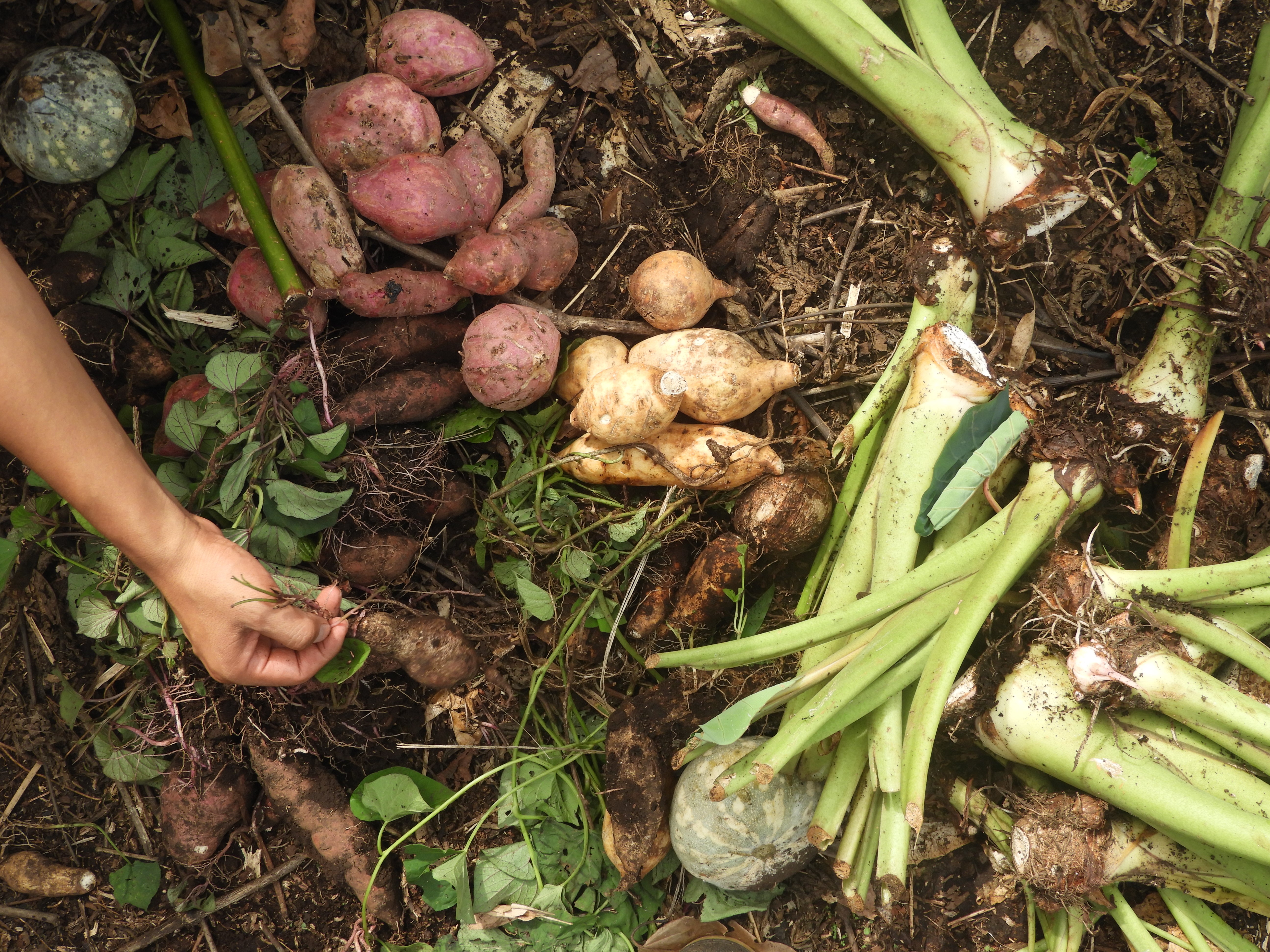
Enriqueta is one of the last women in her community still farming an Aja. An Aja is a traditional agroforestry system managed by Shuar women for centuries. Walking through one feels nothing like walking through a farm. It looks and feels like a forest. But everything around you is planted and managed: over fifty species of plants used for food, medicine, and construction. A single Aja feeds a family, provides the materials to build a house, and cures illness, without clearing the surrounding forest.
Most Ajas in this region are gone. In the 1960s and 70s, Ecuador's military government pushed colonization of the Amazon. Land that wasn't visibly cleared was classified as idle and could be seized. Shuar families faced a choice: cut the forest or lose it. Ajas, which depend on cycles of cultivation and fallow that can look like untouched forest, were abandoned across the region. What replaced them is what we drove through to get here: degraded pasture.
Enriqueta maintained five Ajas through all of this. She told us no outsiders had ever asked to visit them before.
What we found
In March 2026, we conducted the first vertebrate survey ever done on a Shuar Aja. We spent two nights surveying amphibians and one morning surveying birds.
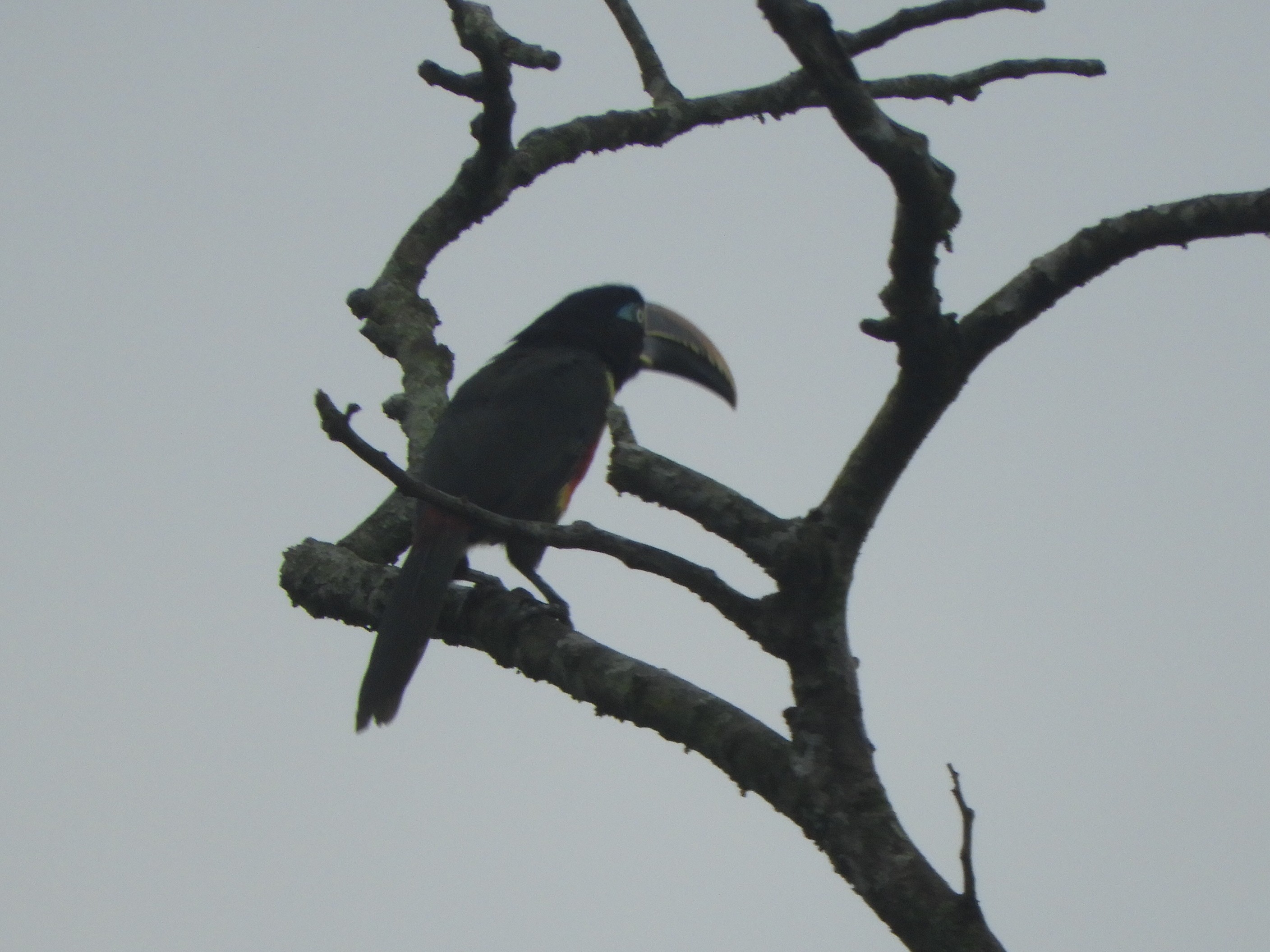
In a single morning of birding, we recorded over twenty species, including forest-dependent birds that require intact canopy structure: aracaris, tinamous, and chachalacas, a species hunted out of the area that is now recovering.
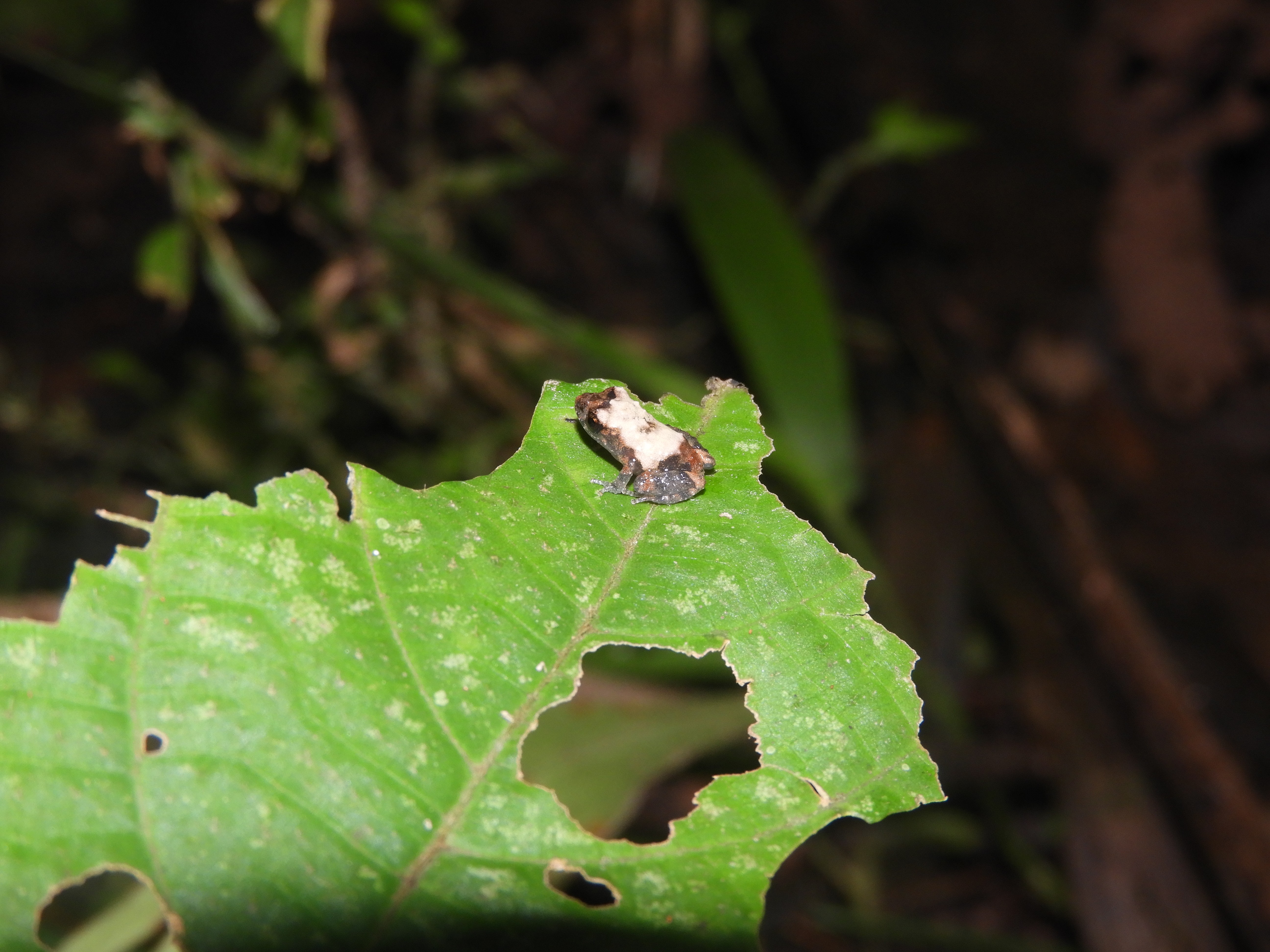
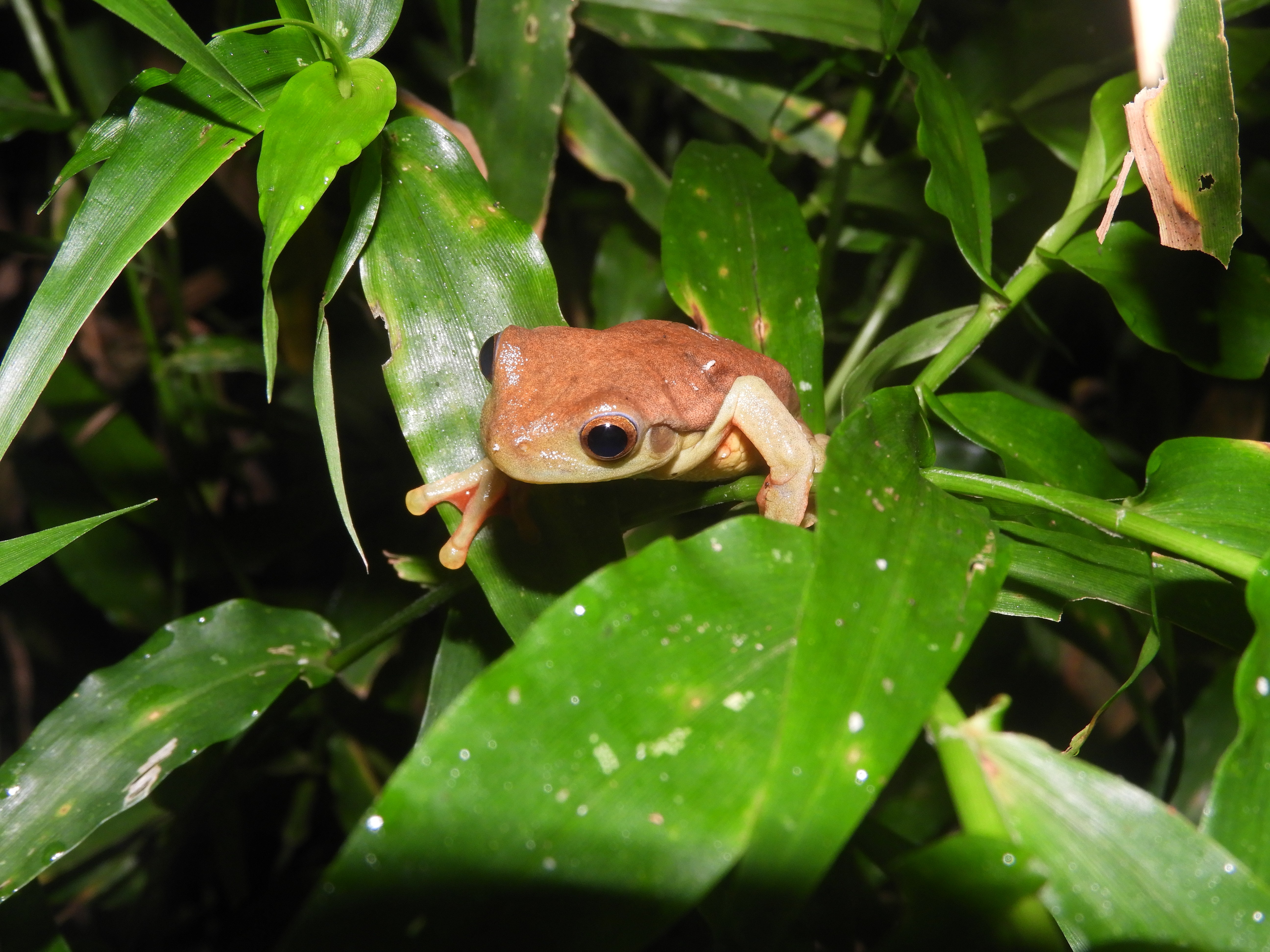
In two nights, we documented ten frog species. Among them was Trachycephalus coriaceus, a canopy-dwelling species rarely encountered and potentially outside its known distribution range. Finding it sitting on a plant inside a managed agroforestry plot was not something we expected.
"Mi mama decia que estos sapos hacen que el camote salga mas grande," Enriqueta told us while pointing at a Painted Forest Toadlet. Her mother said the frogs make the sweet potatoes grow bigger. Whether she is describing pest control, soil health, or something we haven't measured yet, this is ecological knowledge that predates any study we could design.
A small detail: we spent two nights surveying with headlamps and none of us were bitten by a single mosquito, without repellent. In the Amazon, that is strange to say the least.
What it means (and what it doesn't)
We want to be direct about limitations. This is one site, one visit, and no formal control comparison. These results alone do not prove that Ajas restore biodiversity.
But here is what we can say:
The species we documented are not consistent with what published literature reports from cattle pasture or monoculture in the western Amazon. The presence of forest-associated amphibians and birds in an actively farmed plot is noteworthy. The potential range extension of T. coriaceus is significant regardless of study design. And the co-occurrence of forest species alongside disturbance-tolerant generalists suggests the Aja may function as an ecotone: a transition habitat that maintains elements of forest ecology within a productive system.
These findings are promising but preliminary. Establishing that Ajas function as biodiversity refuges requires a comparative study across sites and restoration stages. That is exactly what we are building next.
Enriqueta described ancestral songs directed toward her crops, understood as transmitting energy to the plants. She carries a Nantar, a stone that channels energy between her and her environment. Our study design includes Shuar women as paid expert annotators precisely because we think the knowledge system that built these Ajas is inseparable from the ecological outcomes we're trying to measure.
What comes next
We are running a ten-month acoustic monitoring study across a restoration gradient: Ajas at different stages of regrowth, degraded pasture controls, and primary forest reference sites. Twelve autonomous recorders deployed continuously. Shuar women will collaborate as paid expert annotators, identifying species from recordings and contributing traditional ecological knowledge alongside scientific taxonomy.
Every scientific output, species classifiers, raw audio, and the full processing pipeline, will be open-sourced. Annotation data incorporating traditional knowledge remains under community governance.
The first trip cost under $1,000 and produced a potential range extension and a publishable species list. We have partial funding through the Amazon Research and Conservation Collaborative.
The full study requires approximately $9,000, covering recorders, ten months of deployment and maintenance, annotator compensation, field logistics, and community engagement. We are looking for funding partners, but also for collaborators: people working in restoration ecology who want to help design the study, conservation finance practitioners who understand what evidence biodiversity credit markets will require, and indigenous organizations working on similar systems in the region.
If the data confirms what the first survey suggests, the implications go beyond Tuutin. There are thousands of hectares of degraded land in this corridor. The Aja system has equivalents across indigenous nations throughout the Americas, like the Kichwa chacras of the Amazonian lowlands. A farming system that restores biodiversity, sequesters carbon, and feeds families without external inputs already exists. What's missing is the data to prove it works, and the funding to scale it. We're working on the first part.
If any of this is relevant to your work, reach out at nicolas[ at ]neblinalabs.com.
Acknowledgements
This work would not have happened without Enriqueta Apik and her family, who welcomed us into their Ajas and shared knowledge that no outsider had asked about before. Fernando Huambutzereque opened the door to Tuutin. Elias Viteri-Basso, Camilla Søtorp, and José Antonio Játiva did exceptional work in the field. Ana María Durán Calisto has worked with Shuar communities for years and helped shape this project from the beginning. The Amazon Research and Conservation Collaborative (ARCC) funded and supported the project from its inception.
Pictures by Elias Viteri-Basso.